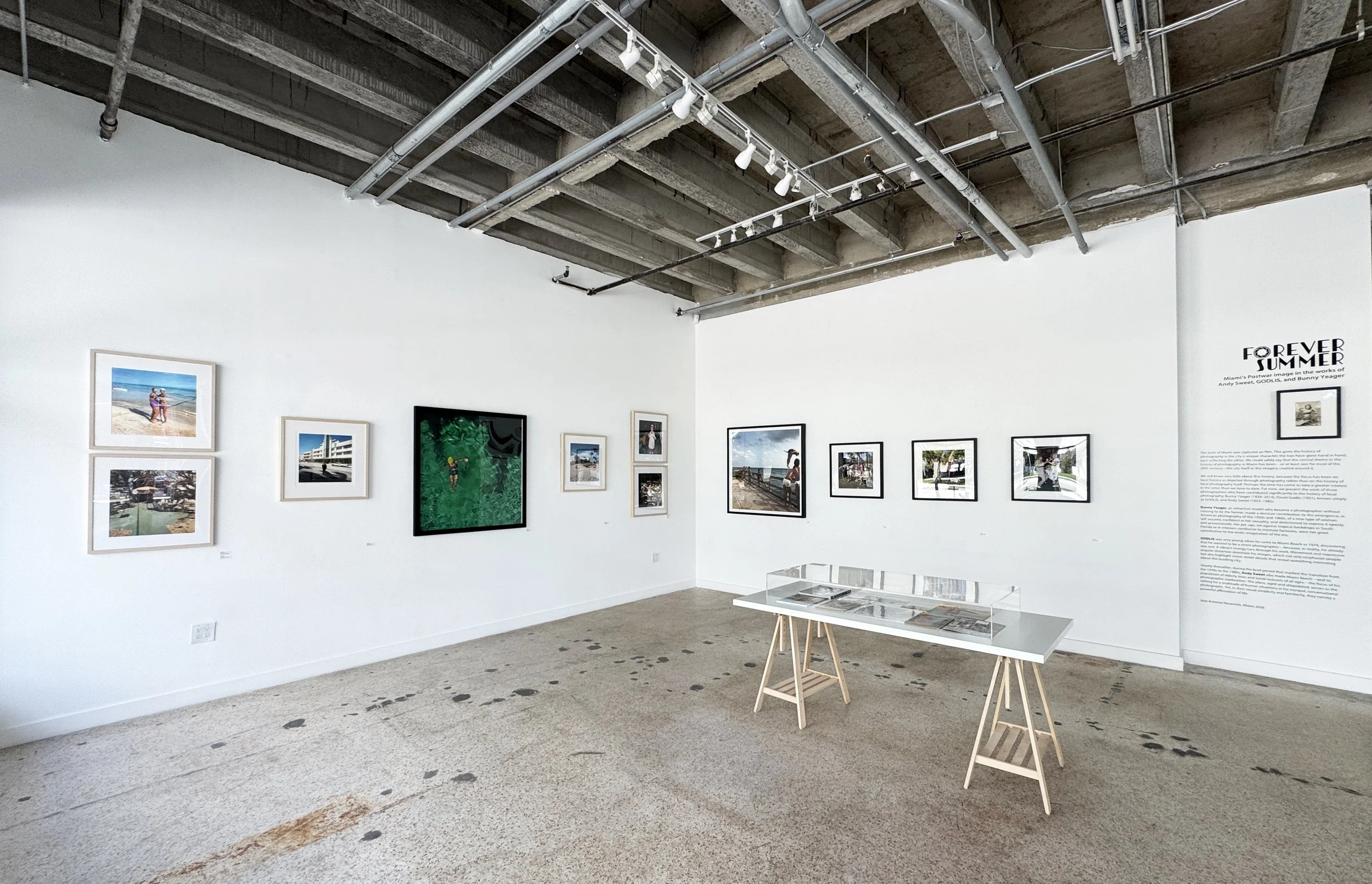
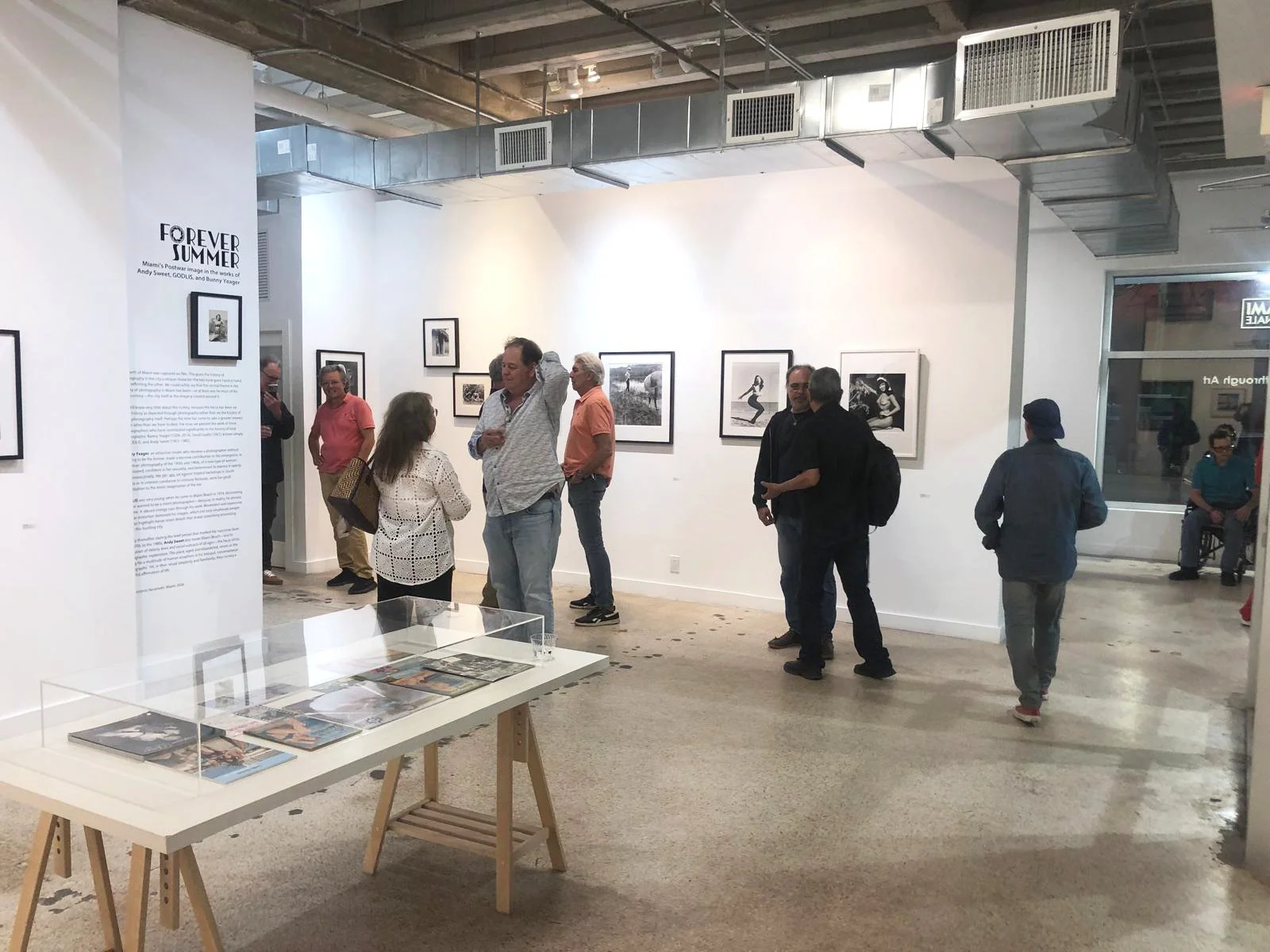
META Miami is pleased to present:
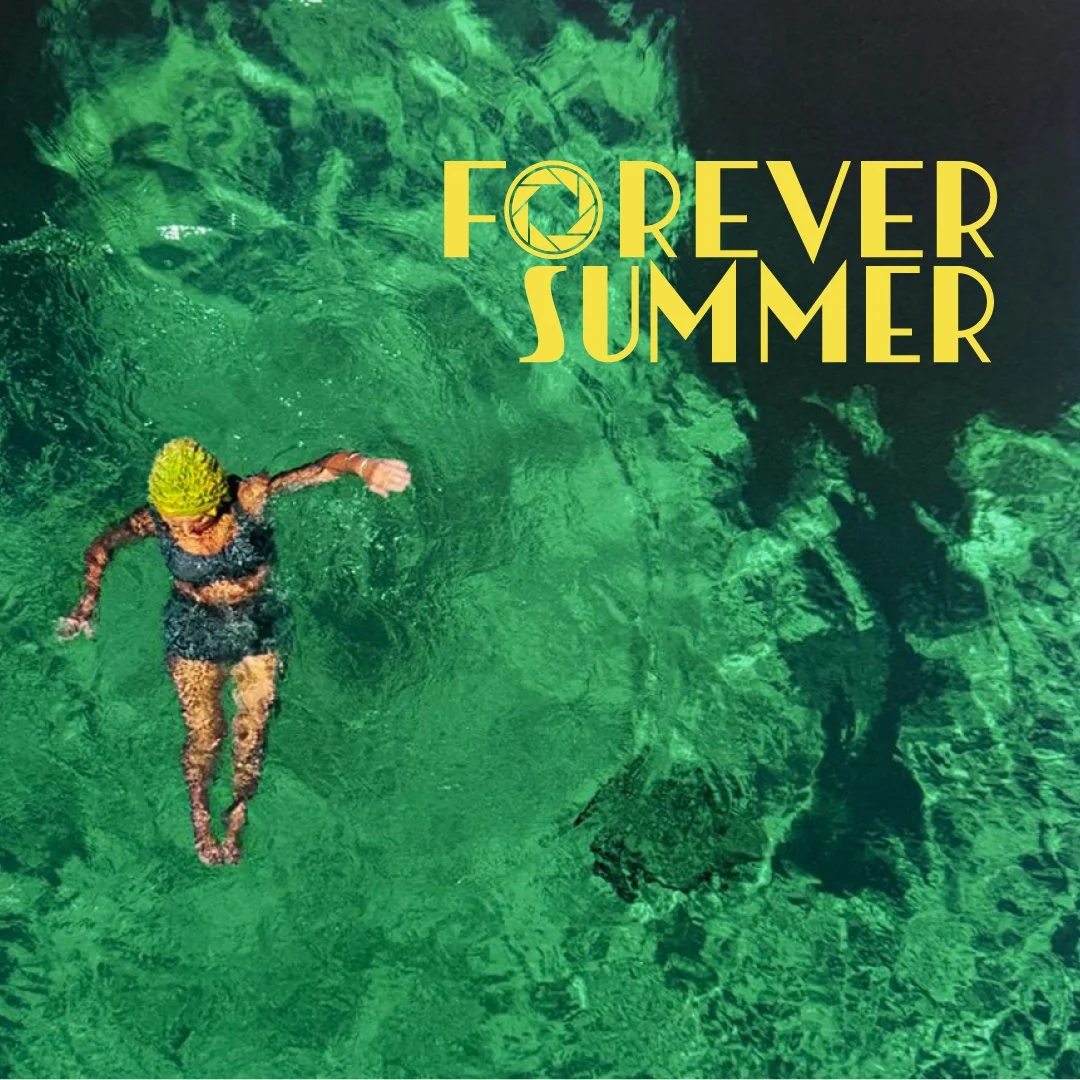
FOREVER SUMMER
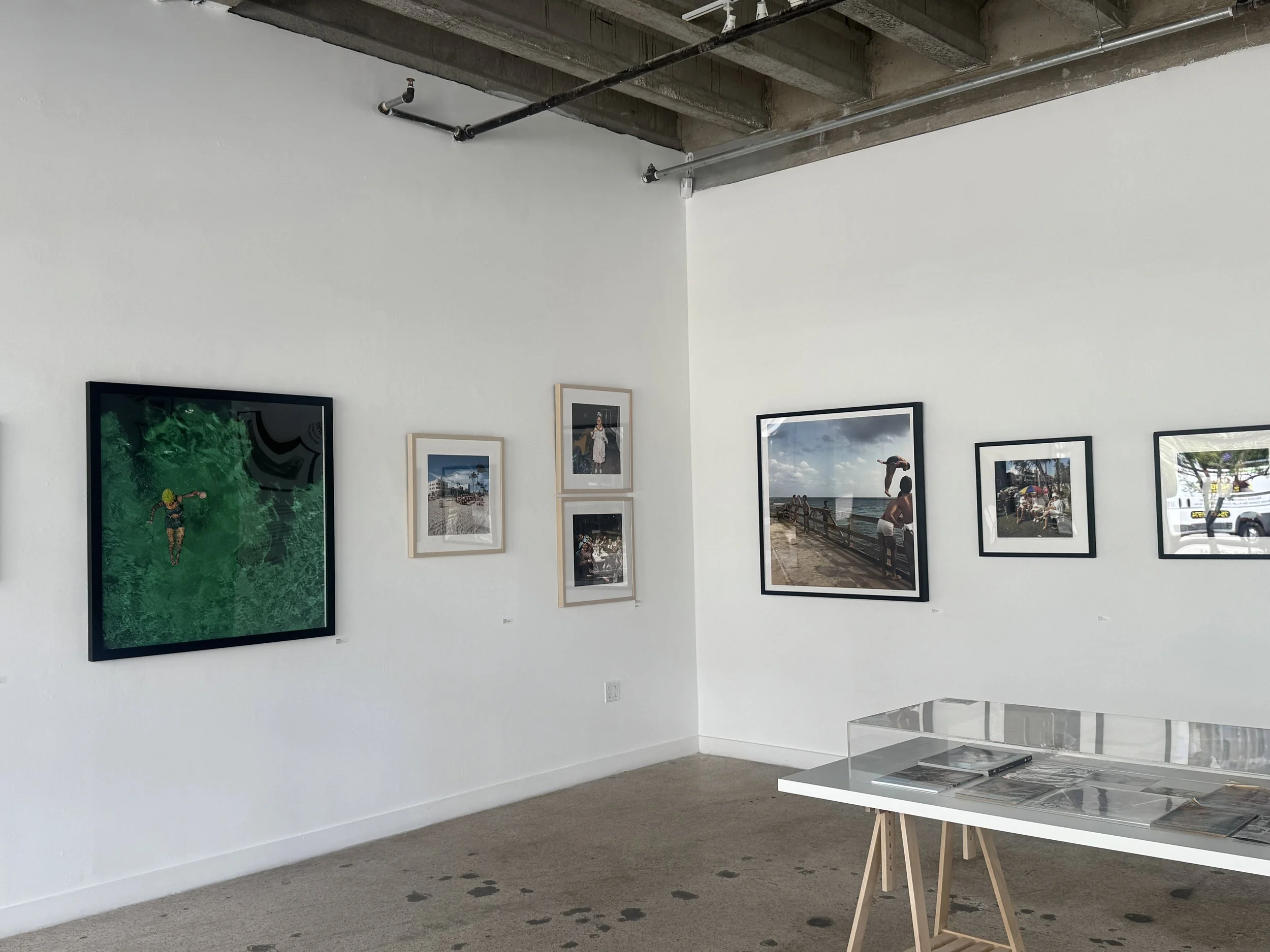
Miami’s Postwar image in the works of Andy Sweet, GODLIS, and Bunny Yeager
From May 21 to August 1, 2026
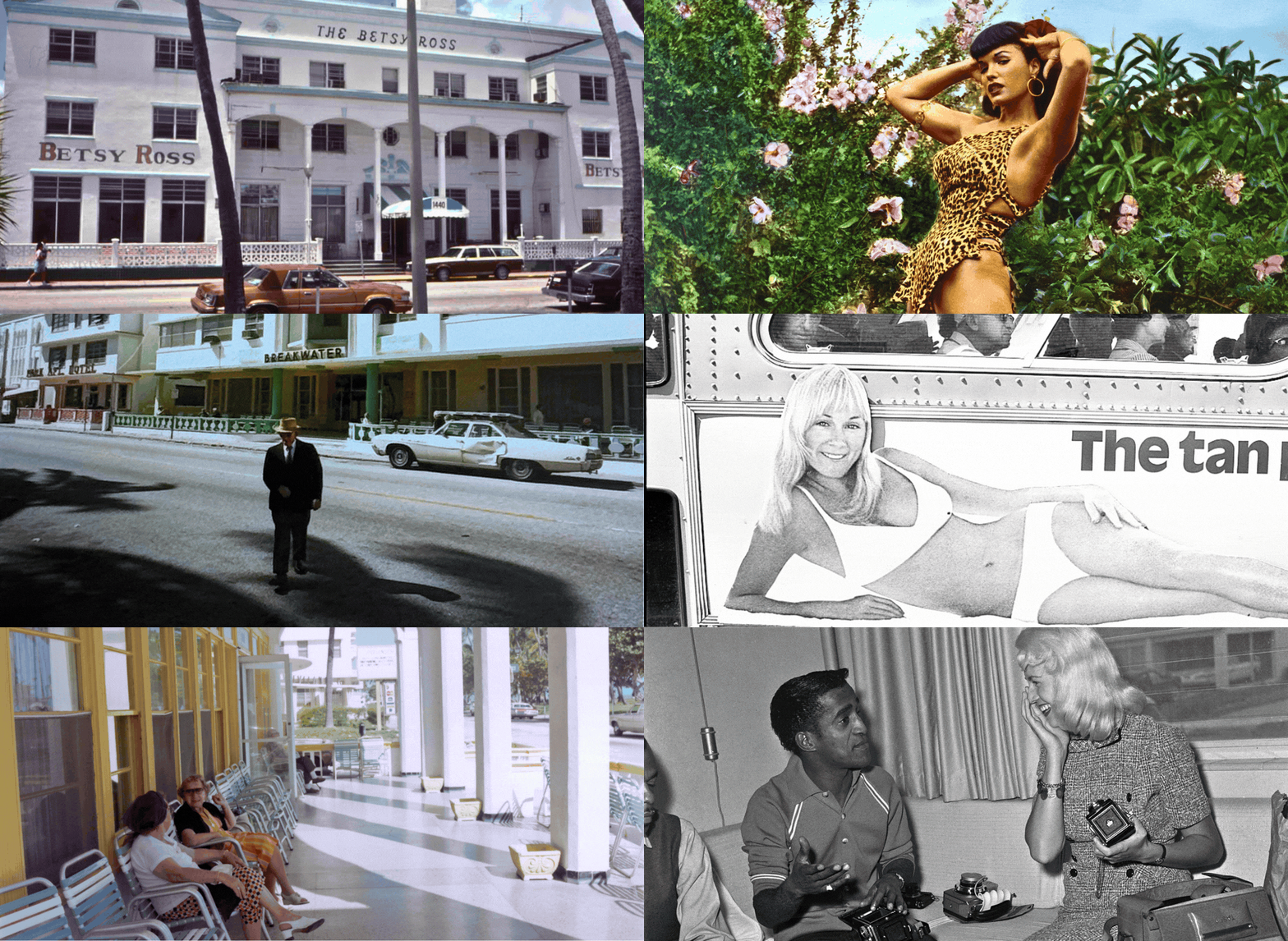
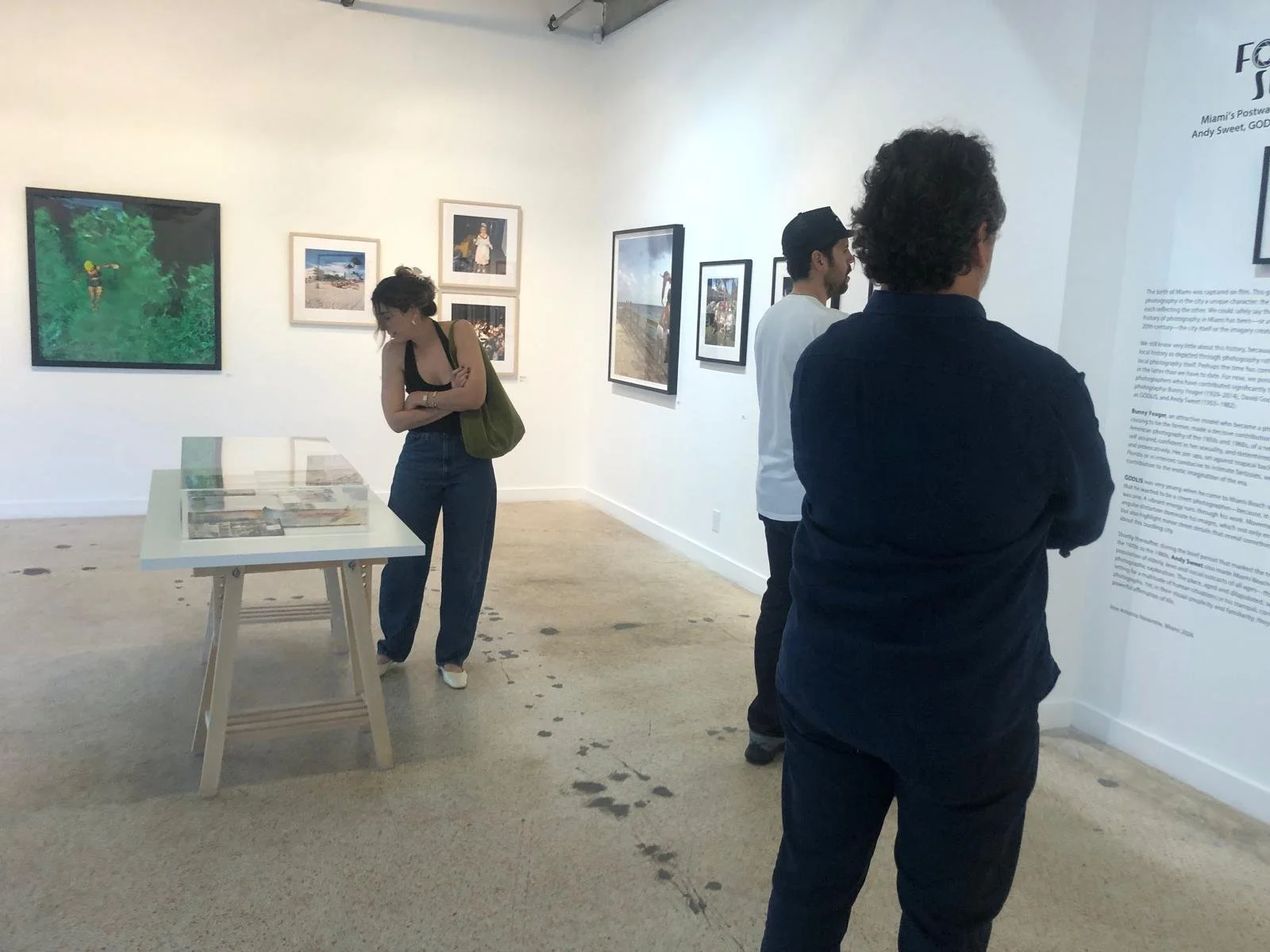
The birth of Miami was captured on film. This gives the history of photography in the city a unique character: the two have gone hand in hand, each reflecting the other. We could safely say that the central theme in the history of photography in Miami has been—or at least was for most of the 20th century—the city itself or the imagery created around it.
We still know very little about this history, because the focus has been on local history as depicted through photography rather than on the history of local photography itself. Perhaps the time has come to take a greater interest in the latter than we have to date. For now, we present the work of three photographers who have contributed significantly to the history of local photography: Bunny Yeager (1929–2014), David Godlis (1951), known simply as GODLIS, and Andy Sweet (1953–1982).
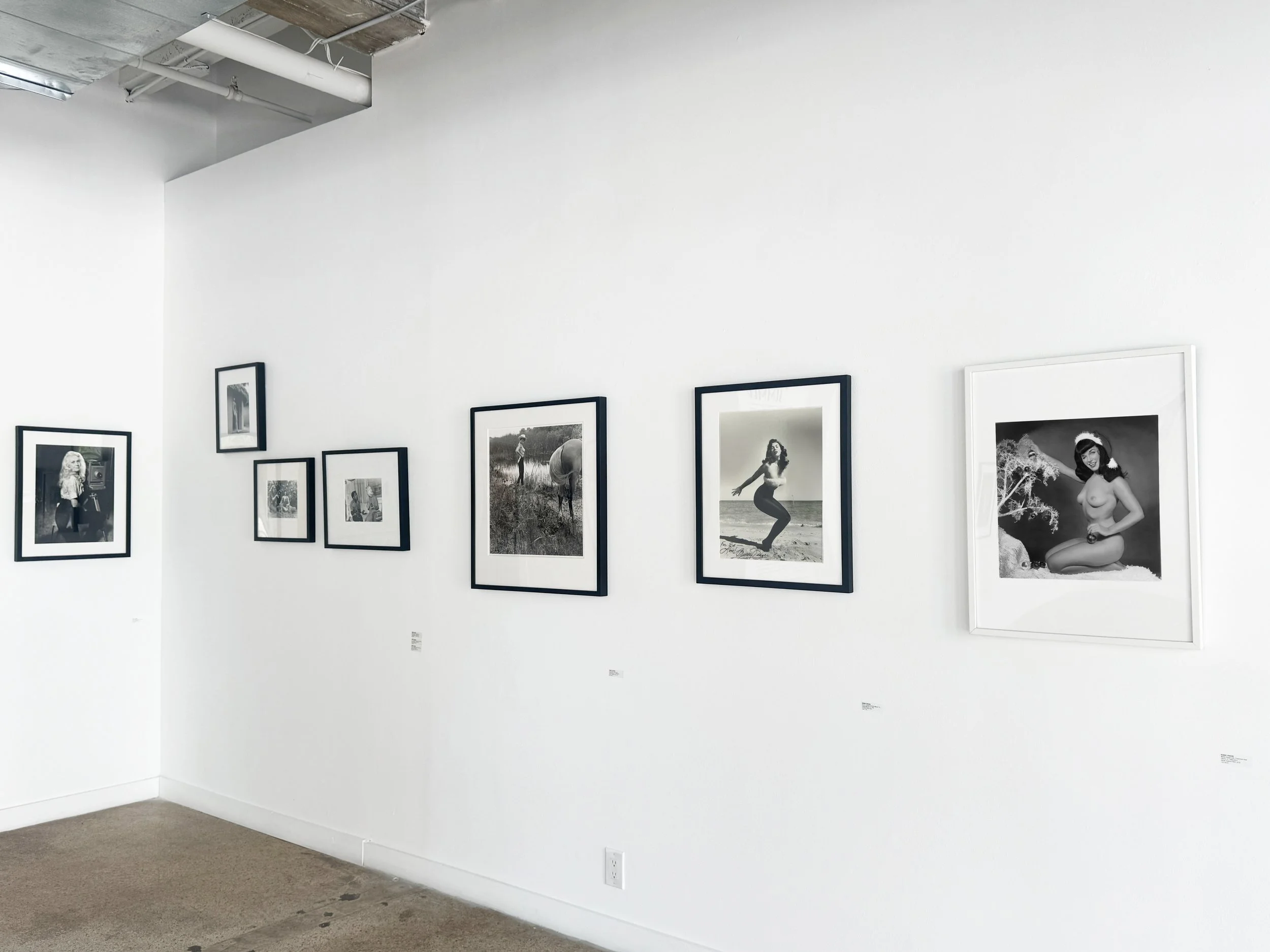
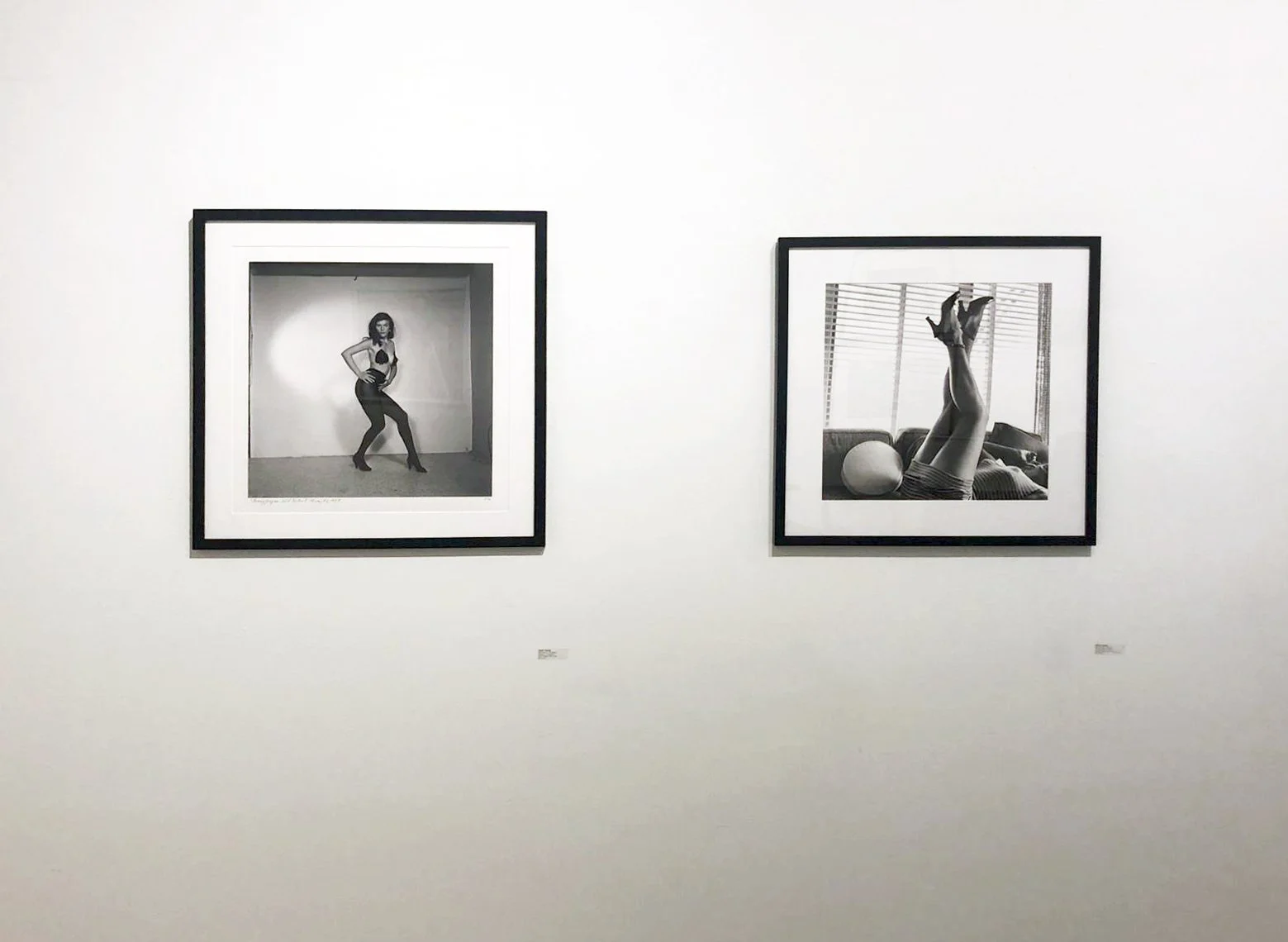
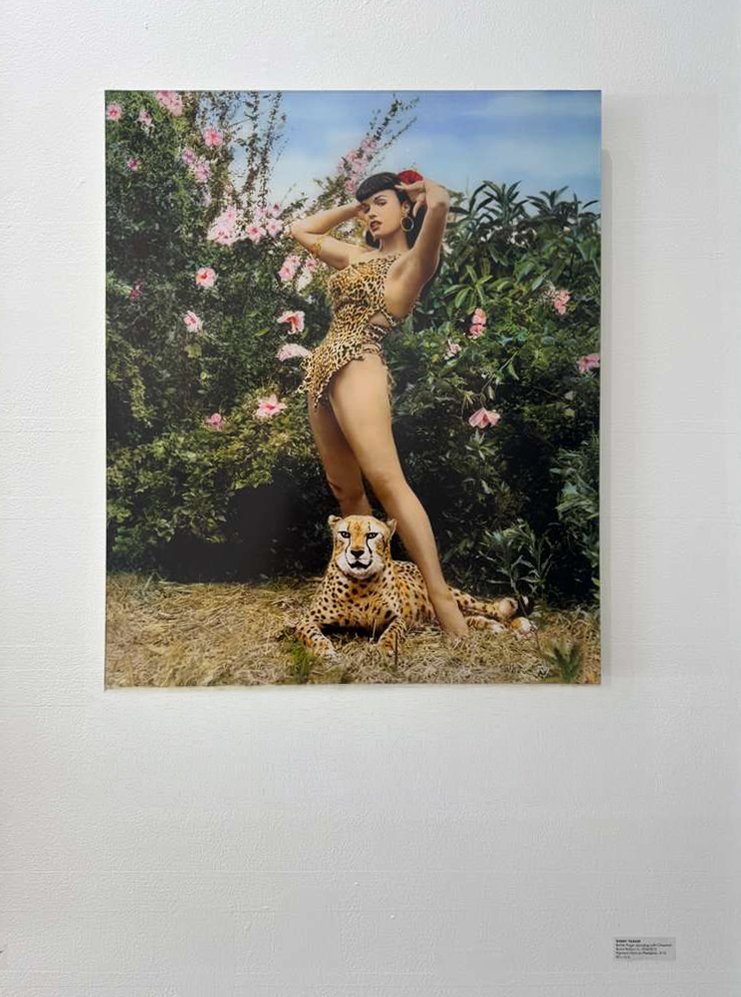
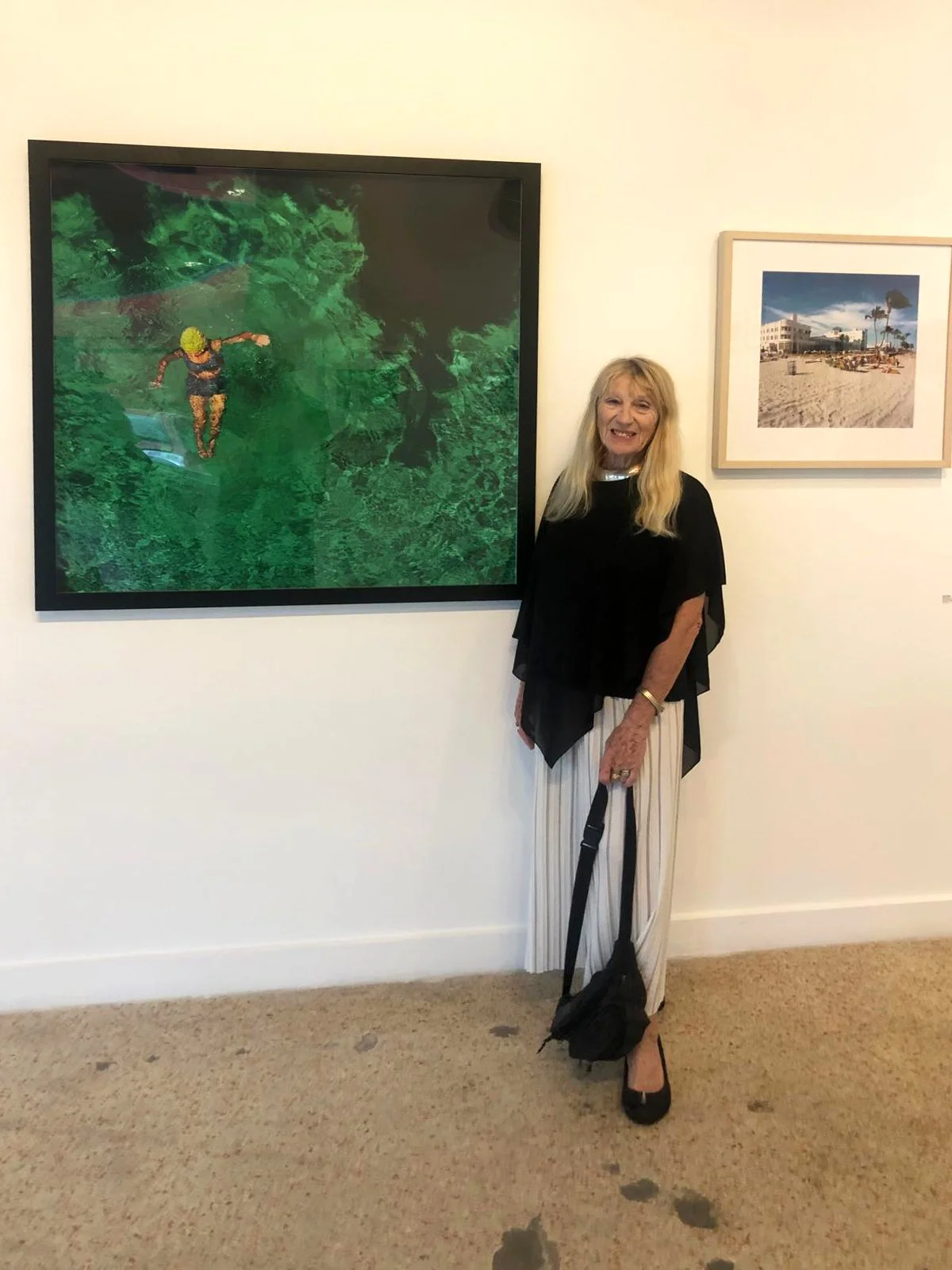
Bunny Yeager, an attractive model who became a photographer without ceasing to be the former, made a decisive contribution to the emergence, in American photography of the 1950s and 1960s, of a new type of woman: self-assured, confident in her sexuality, and determined to express it openly and provocatively. Her pin-ups, set against tropical backdrops in South Florida or in interiors conducive to intimate fantasies, were her great contribution to the erotic imagination of the era.
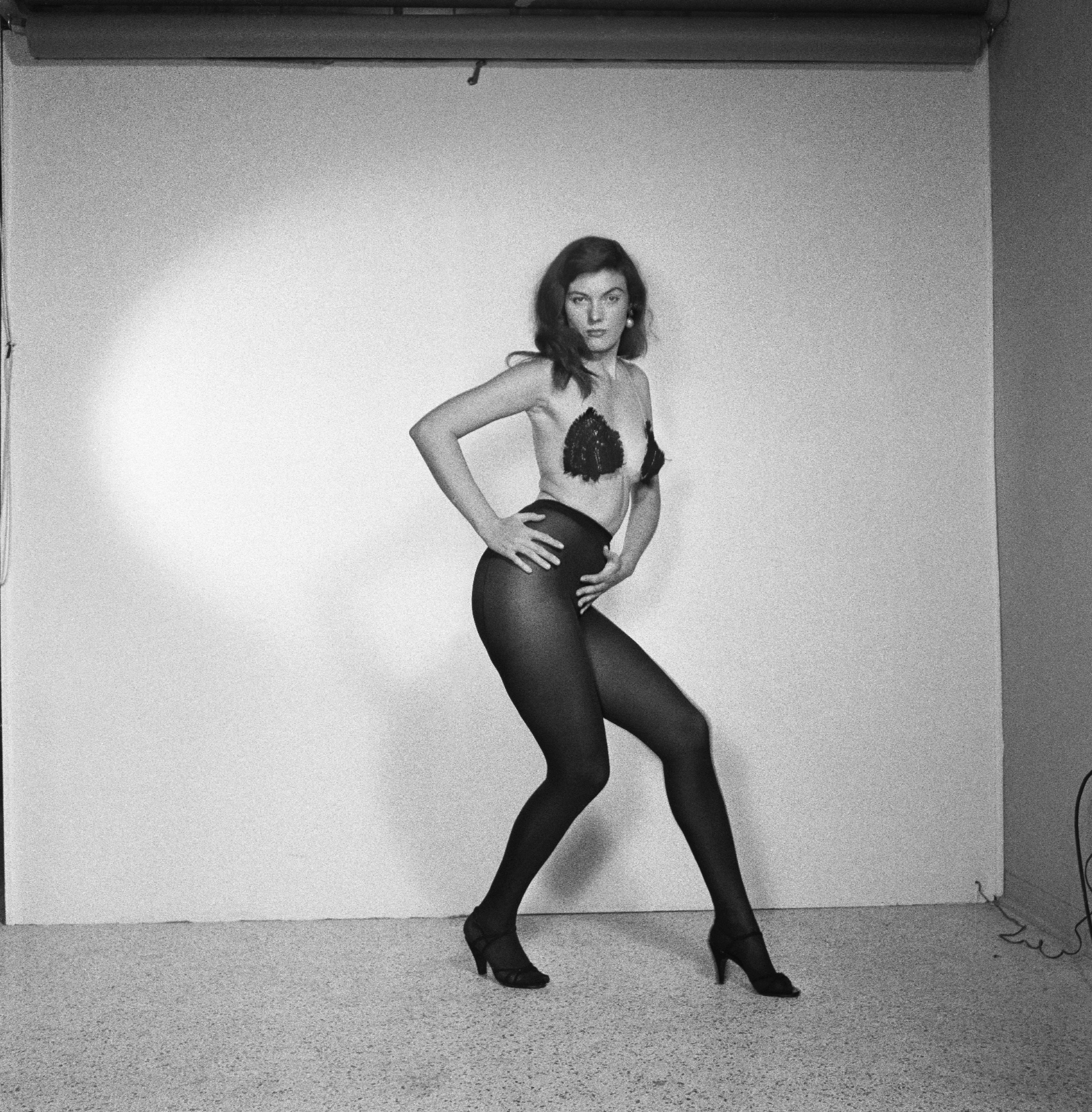
Bunny Yeager. Self Portrait, Miami, FL 1953. Gelatin Silver Print. 20 x 20 in
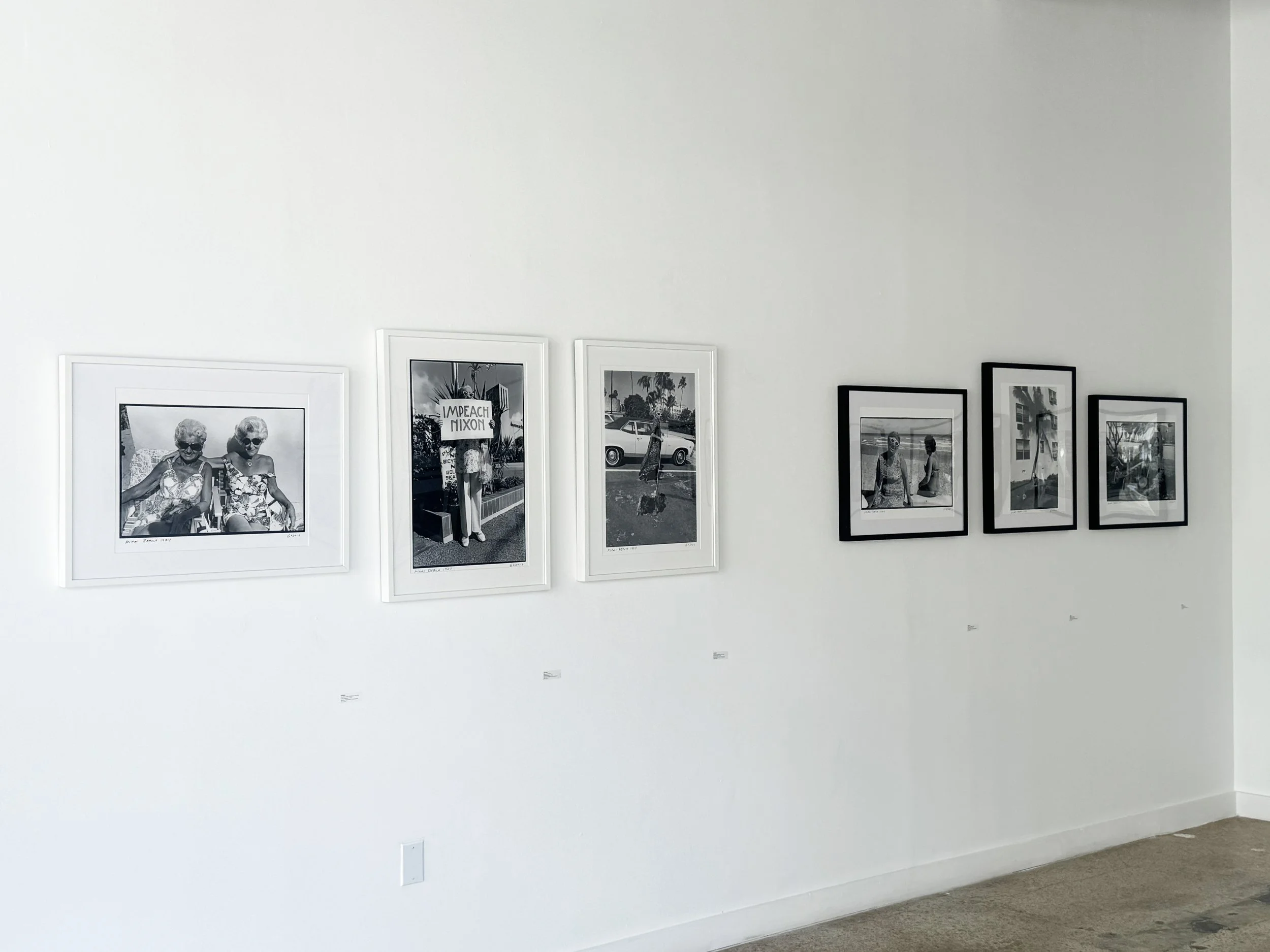
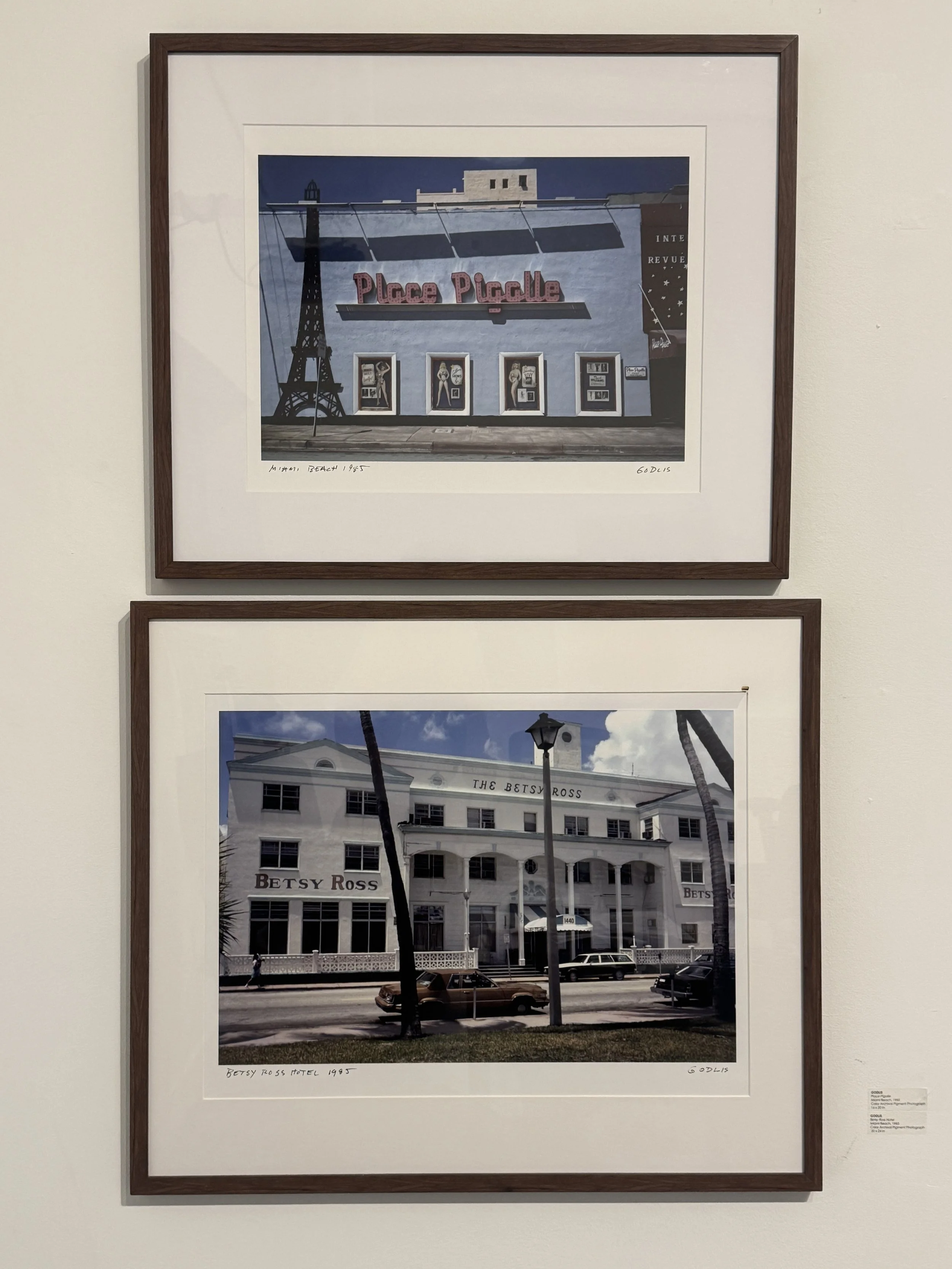
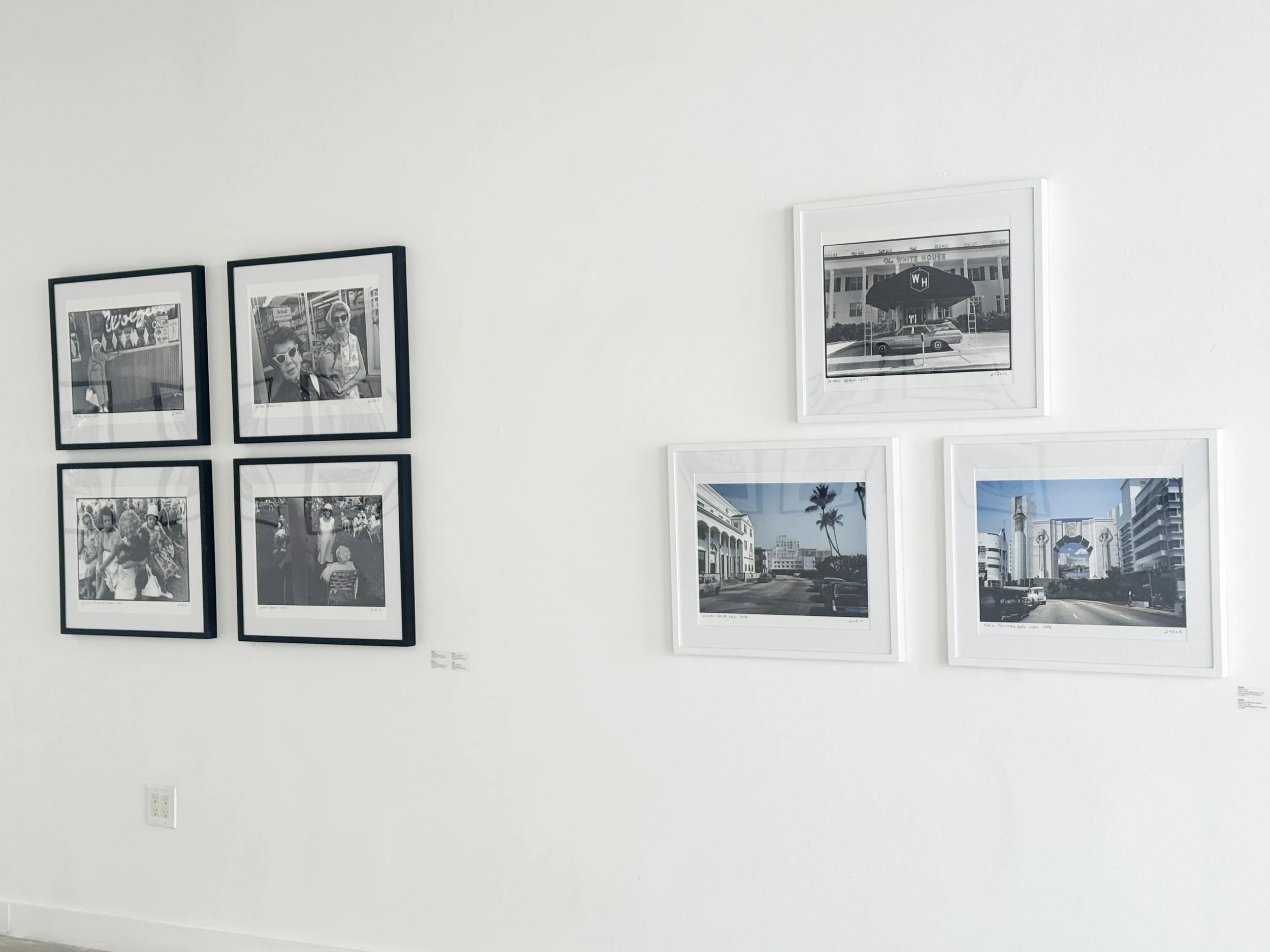
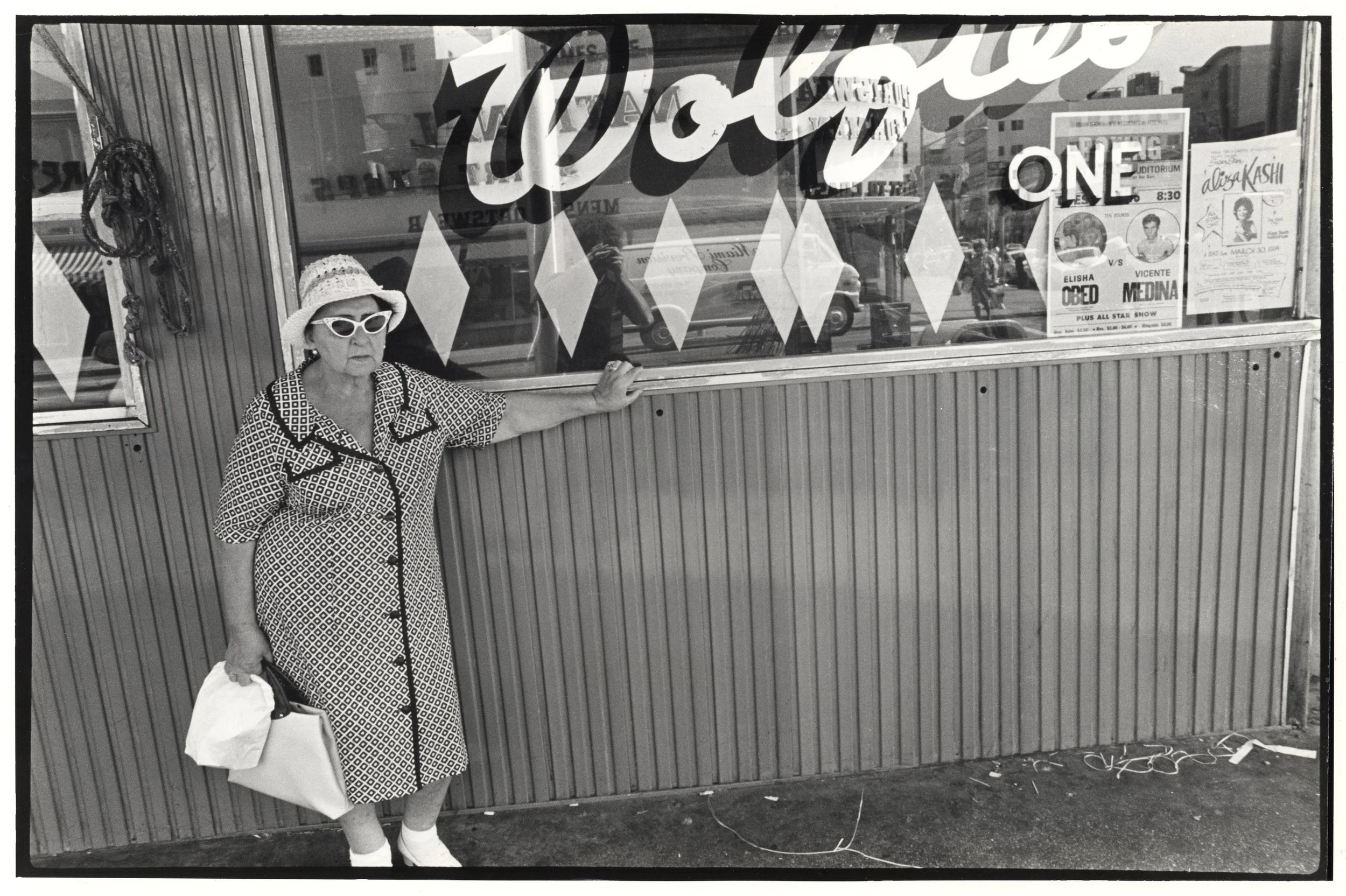
GODLIS was very young when he came to Miami Beach in 1974, discovering that he wanted to be a street photographer—because, in reality, he already was one. A vibrant energy runs through his work. Movement and expressive angular distortion dominate his images, which not only emphasize people but also highlight minor street details that reveal something interesting about this bustling city.
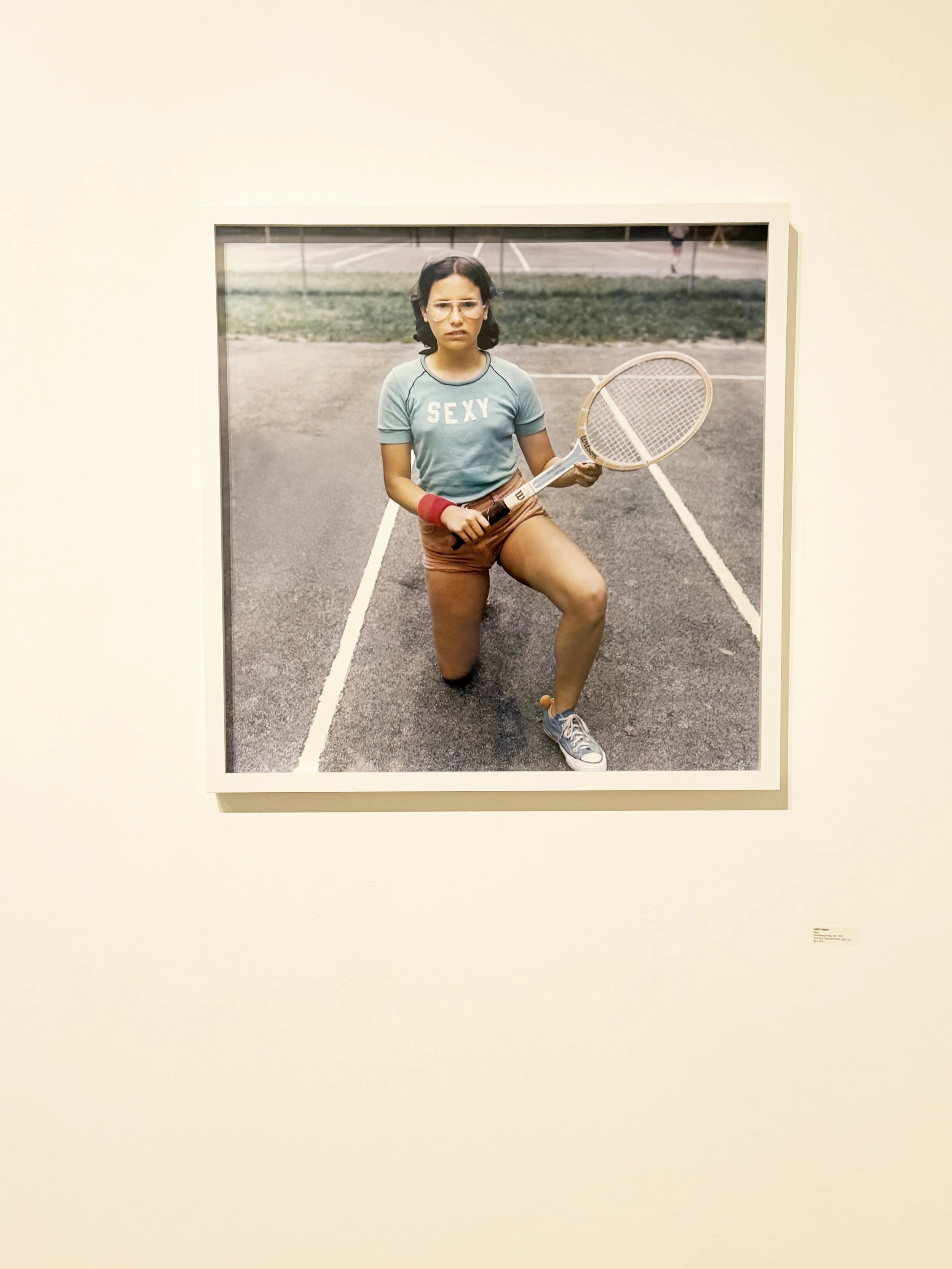
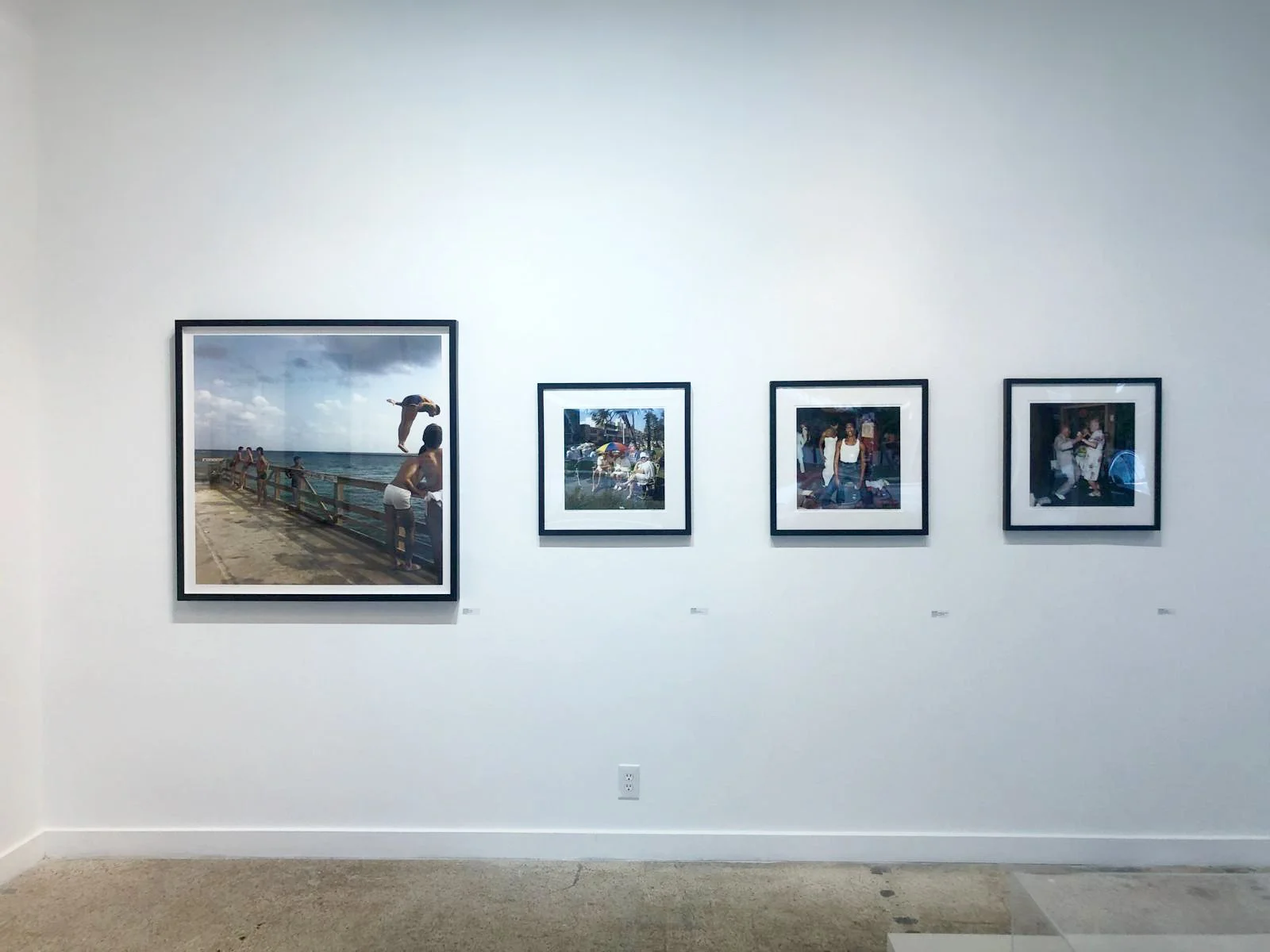
Shortly thereafter, during the brief period that marked the transition from the 1970s to the 1980s, Andy Sweet also made Miami Beach—and its population of elderly Jews and social outcasts of all ages—the focus of his photographic exploration. The place, aged and dilapidated, serves as the setting for a multitude of human situations in his tranquil, conversational photographs. Yet, in their visual simplicity and familiarity, they convey a powerful affirmation of life.
Jose Antonio Navarrete, Miami 2026
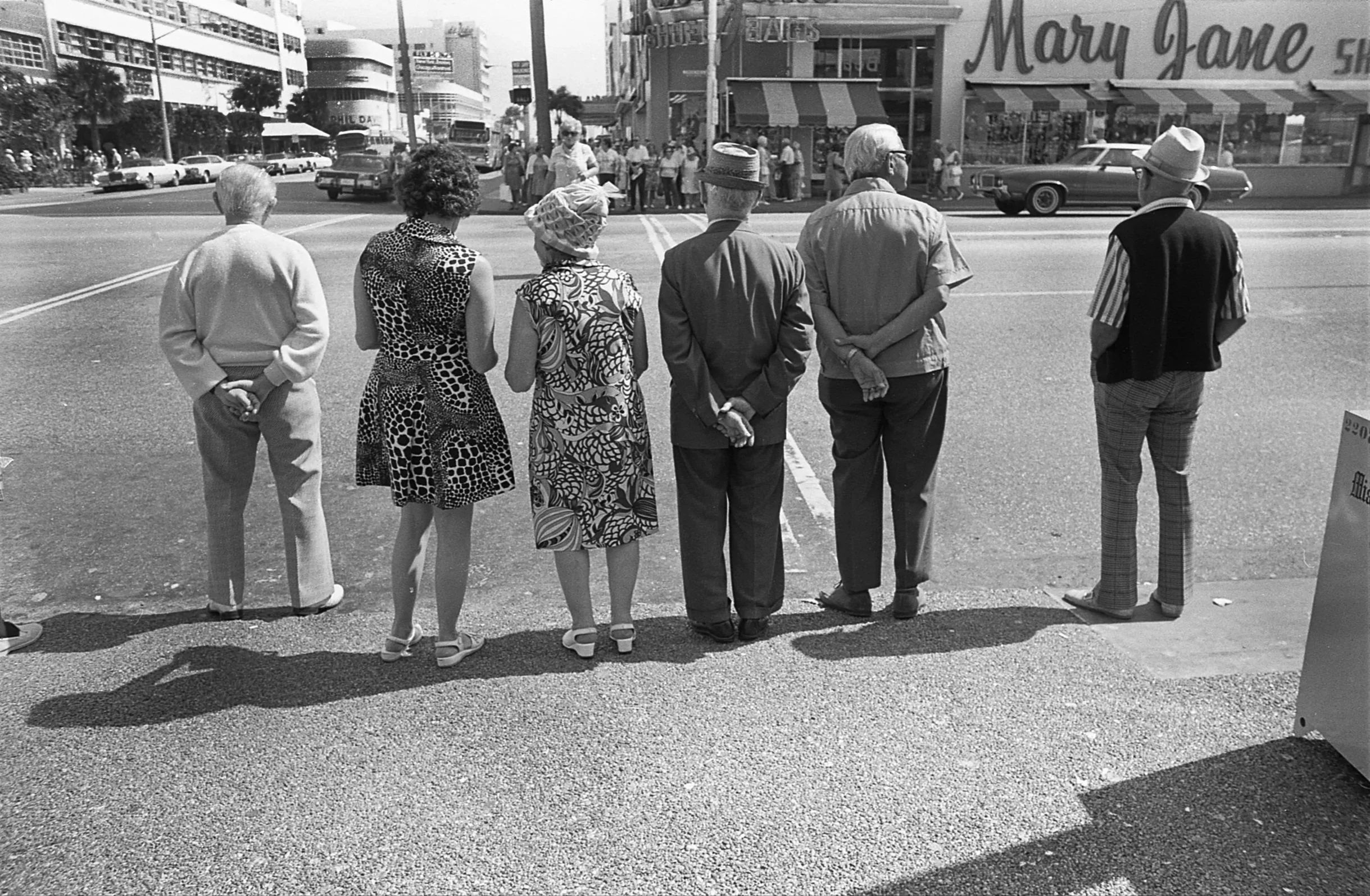
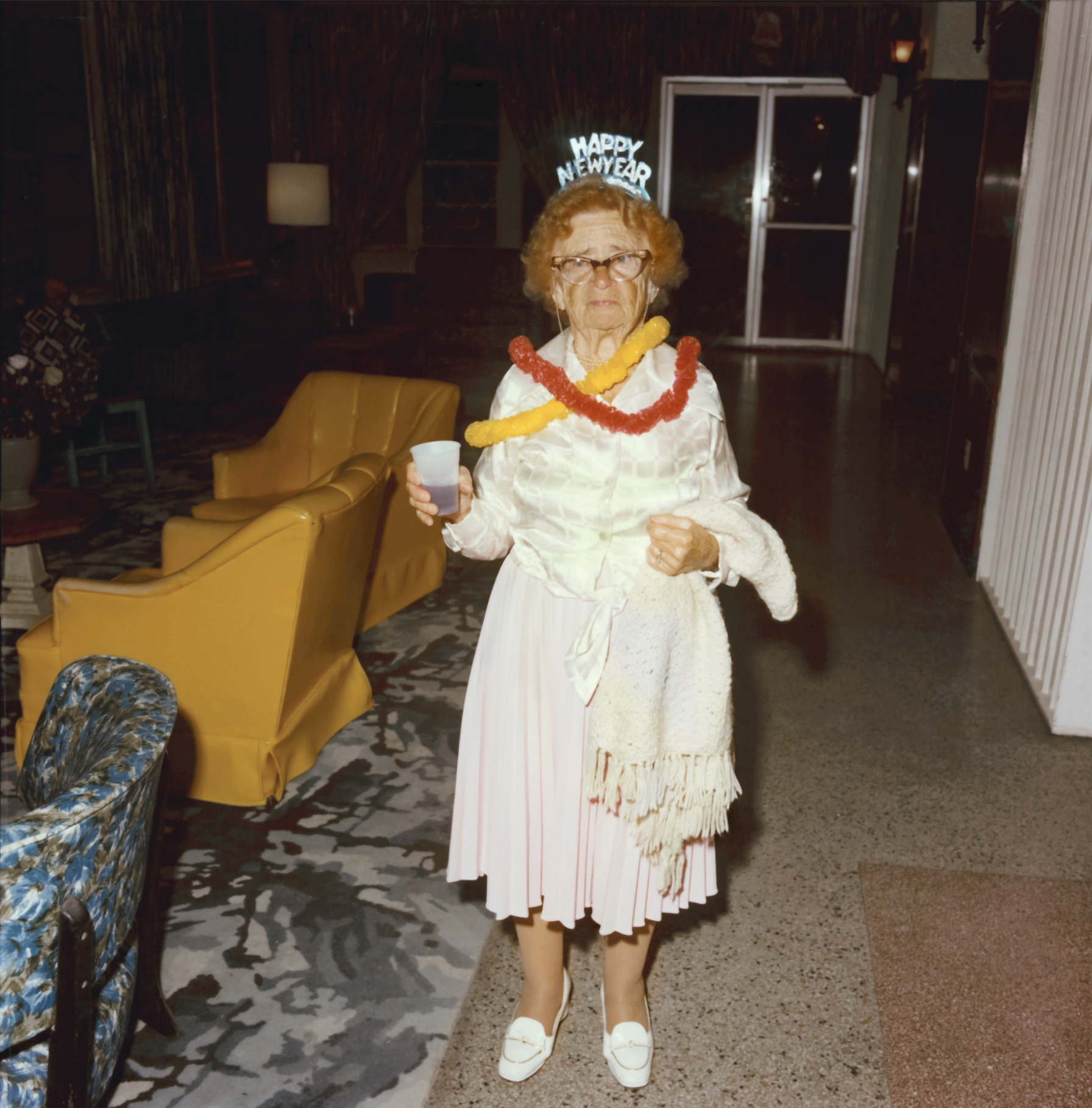
Top: GODLIS. Mary Jane Corner. Corner View, Miami Beach, 1974. Bottom: Andy Sweet. Woman at New Year’s Party. Miami Beach, FL 1979/2025
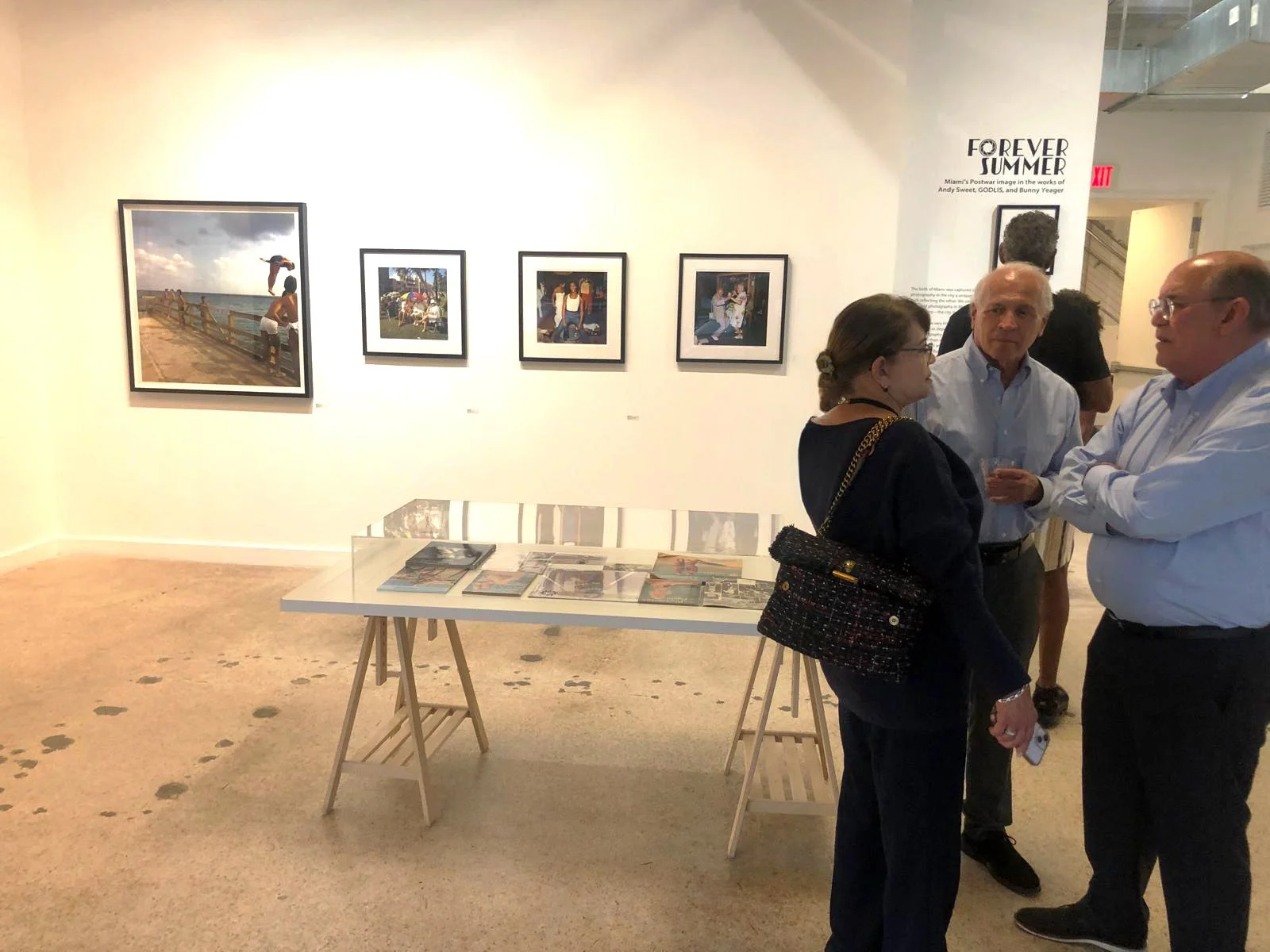
“This exhibition isn't just about nostalgia,” says Milagros Maldonado. “It’s about the specific, electric energy that happens when you mix Sweet’s technicolor joy with Godlis’s architectural grit and Yeager’s daring style. It’s the sun-drenched Miami mirage resonating in our minds—a place of Forever Summer.”
About Bunny Yeager
Bunny Yeager: The Pin-Up Pioneer
The Pageant to Photography Roots
Born Linnea Eleanor Yeager in Pennsylvania in 1929, she moved to Florida at age 17 and adopted the nickname "Bunny." After graduating from Miami Edison High School, her striking looks and charisma propelled her into a highly successful modeling career, including major local titles such as "Queen of Miami." Driven by a sharp entrepreneurial wit and a desire to save money on modeling fees, she enrolled in a night photography class in Miami in 1953.
The 1950s Pin-Up Breakthrough
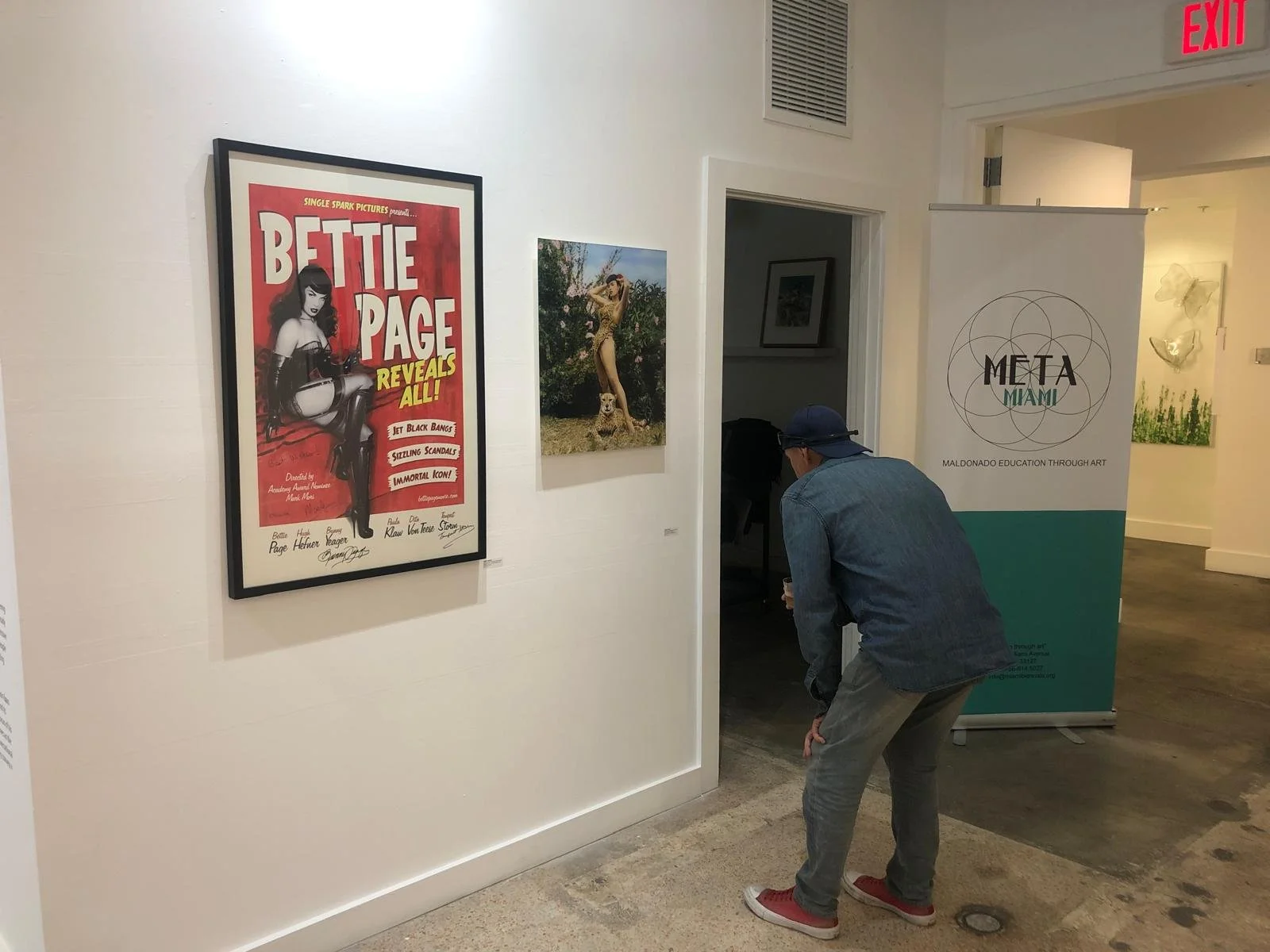
Yeager rapidly transitioned from model to a powerhouse behind the lens, pioneering the use of outdoor natural light and fill flash to eliminate harsh shadows. Her revolutionary collaboration with icon Bettie Page in 1954 yielded over 1,000 images, including Page’s famous 1955 Playboy centerfold, which fundamentally reshaped American erotica. Yeager became a staple for men's magazines, shot eight Playboy centerfolds, and famously photographed Ursula Andress in her iconic bikini for the James Bond film Dr. No.
The Glamour and Wynwood Legacy
As men's magazines grew increasingly explicit in the 1970s, Yeager stepped away from the mainstream industry to preserve her distinctive aesthetic of playful allure. In her later years, her immense contributions to fashion and photography were honored with major retrospectives at the Andy Warhol Museum and the Museum of Art Fort Lauderdale. Before her passing in 2014, she maintained a studio in Miami’s Wynwood Art District, cementing her legacy as the legendary "Queen of the Pin-Up."
Andy Sweet: The Color Pioneer
The South Beach Subculture Roots
Born and raised in Miami, Andy Sweet returned home in 1977 after earning his Master of Fine Arts from the University of Colorado at Boulder. He felt an urgent calling to document the old-world Jewish community that uniquely defined South Beach at the time. To Sweet, this coastal enclave was not a bleak or pedestrian retirement community but a rich, deeply vibrant cultural oasis that deserved preservation.
The Candy-Colored Breakthrough
While in graduate school, Sweet joined a small group of young artists exploring the creative possibilities of color photography. Rejecting rigid, formalist theory, he used vibrant, beach-ball hues and an intuitive, rapid-fire shooting style to mirror the lively spirit of his elderly subjects. Like his major influence, Diane Arbus, Sweet avoided self-conscious art-making, favoring unmediated, joyful interactions that captured the pure, spirited essence of the local culture until his tragic, unsolved murder in 1982 at age 29.
The Lost and Found Legacy
Sweet's sudden death devastated the local community, but he left behind a massive archive of hundreds of brightly colored prints capturing a bygone era of Miami Beach's cultural heritage. Though the original negatives were tragically lost for decades, a massive restoration effort culminating in the 2019 documentary The Last Resort and various photobooks secured his place in history as a visionary colorist who immortalized South Beach's golden age.
About David GODLIS
David GODLIS: The Street Chronicler
The "Jewish Disneyland" Roots
Born in New York City in 1951, Godlis spent his childhood winters in Miami Beach, where his grandfather owned an apartment complex. Escaping the harsh northern winters for the sun-drenched Atlantic coast felt like stepping into a "Jewish Disneyland." The surreal visual landscape of palm trees, bright sun, and elderly Eastern European Jewish immigrants living out their golden years left a lasting, nostalgic imprint on his young, creative mind.
The 1974 Miami Breakthrough
By 1973, Godlis was a 22-year-old photography student in Massachusetts, deeply inspired by street photography legends such as Diane Arbus. In January 1974, he took a pivotal 10-day trip to visit his grandmother, who lived just off Ocean Drive. Armed with 60 rolls of black-and-white film, he captured a faded enclave of Art Deco hotels serving as a retirement haven. Godlis later called this trip his ultimate artistic turning point—the exact moment he discovered his own unique visual voice.
The Punk Connective Tissue
Though Godlis returned north to achieve fame by capturing the late-1970s NYC punk rock scene at CBGB, his Miami work laid the foundation for his career. He often noted a poetic aesthetic link between his 1974 Miami subjects and the 1976 punk explosion: because the youth of the CBGB scene bought vintage mid-century clothing from thrift shops, the rock stars he shot in New York were often styled exactly like the grandmothers he had photographed on Florida beaches.
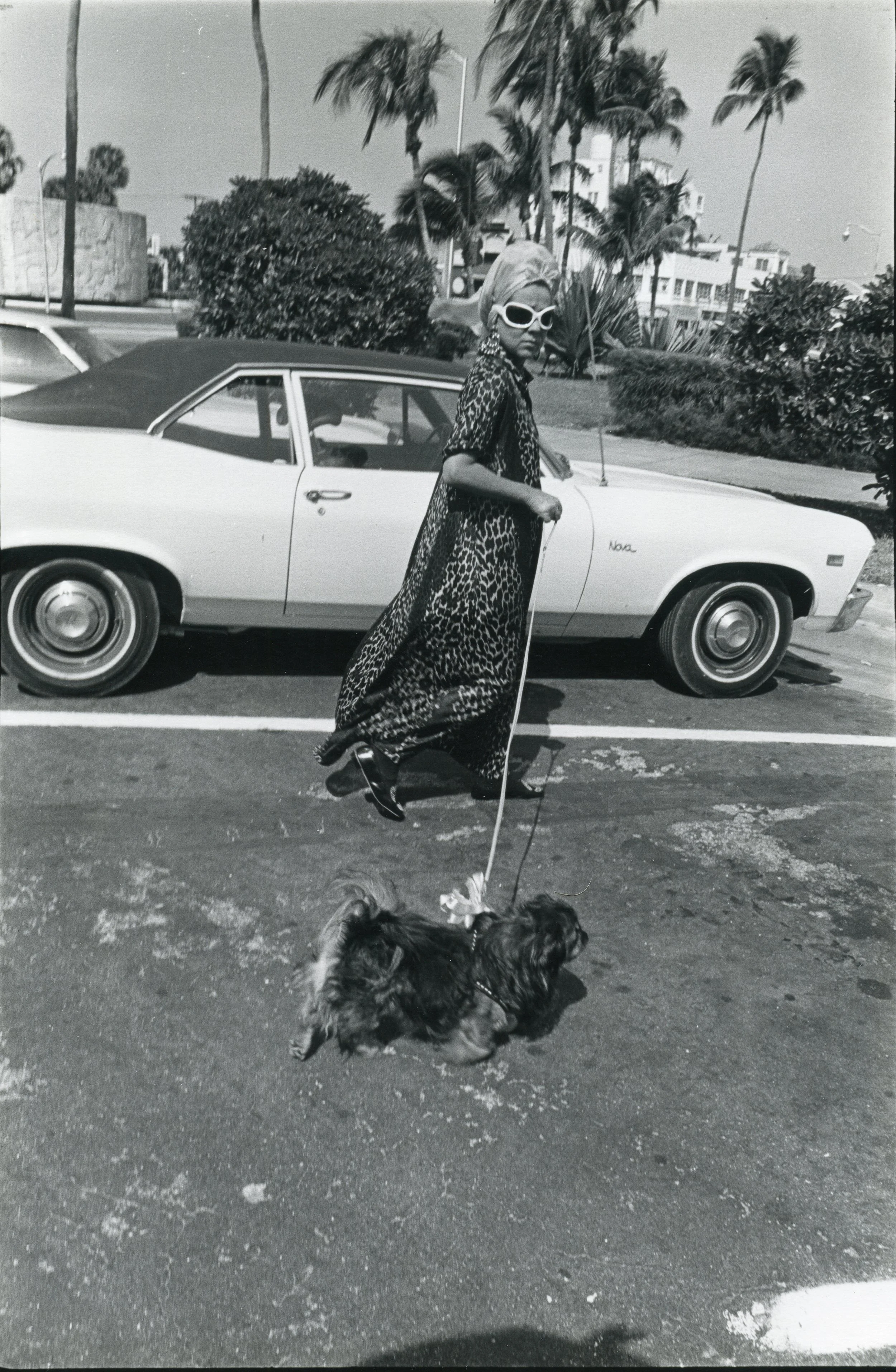
GODLIS. Lady in sunglasses with dog. Miami Beach, 1974